
Start a Los Altos Residents Directory Search
Every record in this city answers to a different keeper. Los Altos splits a person, a parcel, and a past household among several custodians. Start from the fact you already hold. Then keep each result tied to its record role. The county Assessor links a street address to an APN plus recent property facts. The public web result, though, hides the assessee name. Voter rolls work differently. The Registrar of Voters offers an identity-gated status check, never a street roster. The Clerk-Recorder keeps the deed trail. Superior Court, the library, the museum, and city departments cover the remaining questions.
Timing matters too. Los Altos incorporated on December 1, 1952, so an older building may show county evidence with no city permit. Remember that a deed proves a title role rather than every occupant, and a city affiliation is not proof of a private home; following the order below keeps a name, an address, and a historical clue from collapsing into one unsupported conclusion.
- Start with the physical address or APN in the Santa Clara County Real Property Search. Save the physical city, latest title-changing instrument, transfer date, values, exemptions, and districts.
- Use the Santa Clara County voter status form only for an exact self-lookup with the required name, birthdate, and identity fields. It is not a way to browse people on a street.
- Take the assessor instrument number or APN to the Clerk-Recorder office. Search the grantor and grantee roles, then read the deed and legal description before following an earlier owner.
- For a former household, ask the Los Altos Library and History Museum about yearbooks, vertical files, Town Crier material, oral histories, and any verified reverse directory volume.
- When a municipal file is identifiable but not online, submit a focused California Public Records Act request or ask the responsible city counter which existing record can be inspected.
This order yields leads, not a resident list. Two people can share one name. Middle initials, APNs, case numbers, dates, and legal descriptions are what keep them apart. For a full address-by-address pass, turn to the Los Altos street directory, where parcel, deed, permit, and historical-address evidence stay together.
Los Altos Offices Behind Resident Records
Santa Clara County carries the heavyweight records. Property, deeds, taxes, and Superior Court files live there. Los Altos itself handles the municipal layer: permits, code files, GIS layers, staff affiliations, business licensing, police requests, and council history. California state systems add vital-record copies, professional licenses, business filings, and purpose-limited voter-file access. Pick the office by the question. Title, a public project, an official affiliation, a life event, or a historical household each leads somewhere different.
Santa Clara County Clerk-Recorder
Official records from 1850 forward.
1981-present workstations; 1850-1980 reels, books, or microfilm.
Santa Clara County Assessor
Address and APN property search.
Property Transfer Unit: 408-299-5540
Santa Clara County Registrar of Voters
1555 Berger Drive, Building 2, San Jose.
408-299-VOTE
City Hall is the local counter for most of it. The City Clerk, Building Division, Planning, Code Enforcement, and police-record requests all land at City Hall. Development Services keeps its public counter open Monday through Friday, 8 to 5. Building, code, and planning questions also go through by phone or email. One caution applies before any request. A Los Altos mailing address outside the incorporated limits belongs with the county or the Los Altos Hills authority. So confirm jurisdiction in GIS before sending anything.
How the Los Altos Assessor Search Works
The county Real Property Search maps addresses to parcels. It is not an owner-name directory. Three modes exist: Simple Address Search, Advanced Address Search, and Search by APN. Physical city matters because ZIP codes 94022 and 94024 also cover Los Altos Hills and unincorporated land. A web result can display the latest document number, type, and transfer date, plus assessed values, exemptions, districts, and tax-default status. The owner or assessee stays suppressed online.
The county's search tips explain the postal-city trap. Use the street name and physical city, omit punctuation, and enter numbered streets as numerals. Leave the unit blank to pull a list of condominium or apartment units. An APN works with or without dashes in the documented formats, and assessee information or older ownership detail requires a public terminal or microfiche at the office.
The county property search gives the address-to-APN view. Run it before any office visit.
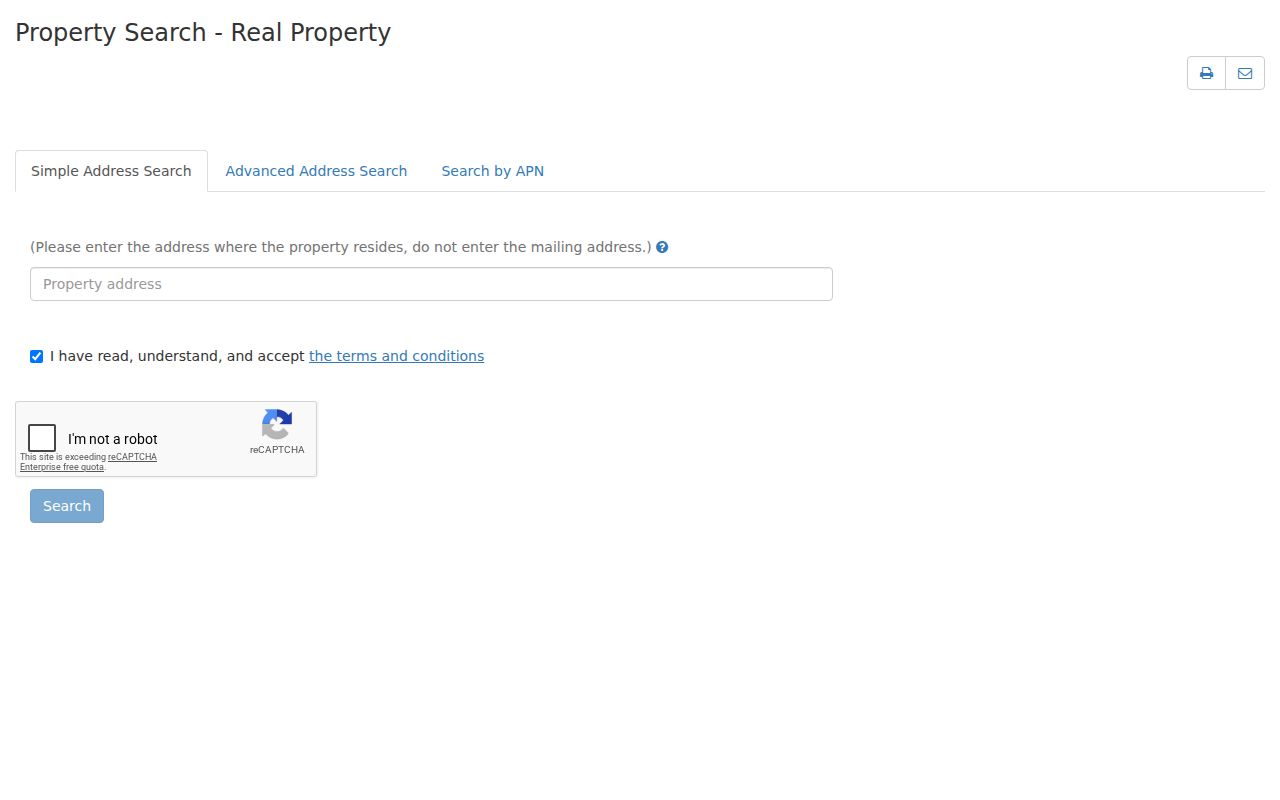
The assessor's page draws the line plainly. Parcel facts sit online, while the assessee name stays behind the office channel.
The visible fields make the address trail reproducible:
| Field | Mode | Required | Format or use |
|---|---|---|---|
| Property address | Simple | Yes | Accept terms before searching. |
| Street Number | Advanced | Conditional | Use with street name and physical city. |
| Street Direction | Advanced | No | Dropdown selection. |
| Street Name | Advanced | Yes | At least one character with physical city. |
| Street Type | Advanced | No | Dropdown selection. |
| Unit | Advanced | No | Omit to browse returned units. |
| City | Advanced | Yes | Select the physical, not postal, city. |
| APN Number | APN mode | Yes | Eight digits or 123-45-678. |
| Terms acceptance | All modes | Yes | Search stays disabled until accepted. |
Keep the assessor result separate from the counter copy. A mailing address can differ from the situs. The public web result also caps current-owner history at the most recent three years. An exemption marks a tax filing, not a resident. The county's sample result shows document and transfer fields, tax-rate area, school and special districts, assessed land and improvement values, exemptions, and net assessed value. Some things stay off the basic web result. The owner or assessee, the mailing address, the sketch, the market sale price, and a linked deed image are all absent. None of that changes the workflow. The official assessor instructions remain the best companion to the field sequence, keeping physical-city and unit handling clear.
Note: An APN is the bridge from an address search to county property records, but it is not itself a person or household identifier.
Current Los Altos Residents Directory Sources
No single database lists every private resident in Los Altos. The current Los Altos residents directory is a set of partial rolls. Each row answers a different question. Some are deliberately narrow. The assessor is parcel-centered. Voter rolls are person-centered but identity-gated. The recorder is instrument-centered. City directories often record official or business affiliations rather than household membership.
| Source | What it can establish | Keeper | Access boundary |
|---|---|---|---|
| Real Property Search | APN, latest instrument, values, exemptions, districts | Santa Clara County Assessor | Free address/APN web search; owner suppressed |
| Voter status lookup | An exact registrant's status and address response | Registrar of Voters | Required identity fields; no street browse |
| Official Records index | Grantor, grantee, document, date, and type | Clerk-Recorder | Office research; copies by instrument or book/page |
| City staff directory | Current municipal department affiliation | City of Los Altos | Free search; JavaScript-rendered results |
| Business directory | Business name, supplied address, phone, and link | City of Los Altos | Public business affiliation, not residence proof |
| Neighborhood Watch and block groups | Ways to form or join a local connection | Los Altos Police and civic groups | No public household roster verified |
A Los Altos residents directory search often starts with the wrong tool. The city's staff and department directory works well when the clue is a public office affiliation. Fields are simple: Category, First Name, Last Name, then Search. A separate business directory can return a supplied business address and phone. Neither one is a private-resident list for Los Altos. The Los Altos city directory search shows how a current municipal affiliation is reached. It works through those category and name fields.
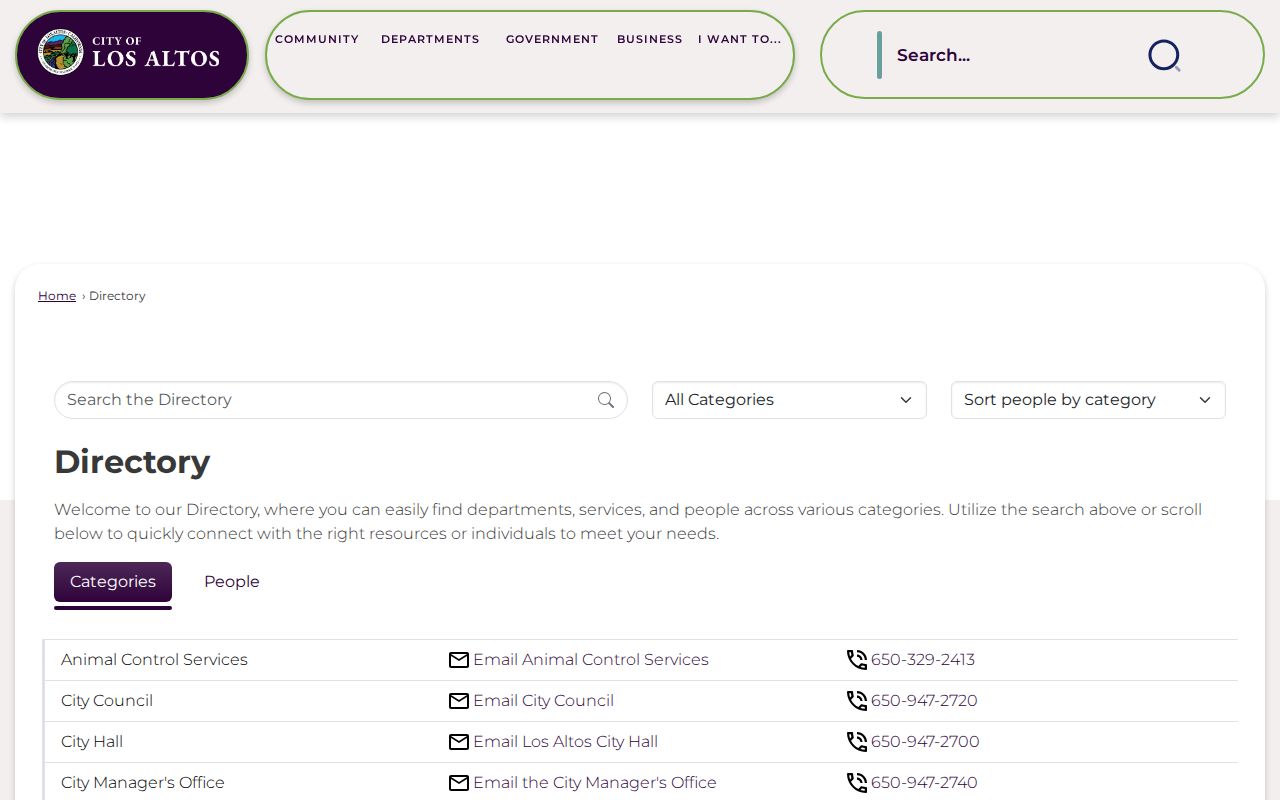
The staff-directory image reflects a public work affiliation, not a residence record. A name-first question in Los Altos may point elsewhere. The court party index, a professional-license search, a business filing, a vital-record application, or the Controller's unclaimed-property search are all options. Each of those reveals a role, an event, a filing, or a historical clue. Not all of them confirm where a person lives now.
The Los Altos Directory Myth
One myth drives most bad lookups: that a commercial search product is a master roll. Another is that some official source must list every person tied to an address. Los Altos has neither. County ownership data is suppressed from the assessor's public web result. The regular voter form is a private self-service check that demands exact identity details. Deeds, permits, business filings, and newspapers each preserve a different relationship to a place. None is a complete residents directory.
Commercial people-finders join purchased data with public records. A joined address can be stale, mismatched, or attached to the wrong person. Official records are narrower and less convenient. Yet their custodian, date, field names, and access rules can all be checked. A sound Los Altos lookup treats commercial material only as an unverified lead. It then returns to the government, court, library, or museum source to confirm the resident record.
| Question | Official record layer | Commercial search category |
|---|---|---|
| Who is tied to a parcel? | Assessor APN facts, office assessee file, recorder instrument | May merge old addresses or ownership clues |
| Was a person a party to a case? | Santa Clara Superior Court party and case index | May omit sealed records or confuse same names |
| What happened to a past household? | Town Crier, library files, census, deed, probate, or vital evidence | Often supplies a thin address trail without context |
The official-versus-commercial line is a privacy boundary too. A record that its custodian can correct should not be swapped for a profile that cannot show where a fact came from. That is the real cost of a commercial residents directory shortcut.
Los Altos Address Terms Keep Records Straight
Address fields look alike but answer different questions. USPS confirms delivery. The assessor uses a physical city to place a parcel in the right tax jurisdiction. A tax mailing address can point somewhere else entirely. A deed's legal description identifies the land even when a street name or number changes. Keeping these roles straight matters most around Los Altos, Los Altos Hills, Loyola, and the unincorporated edges.
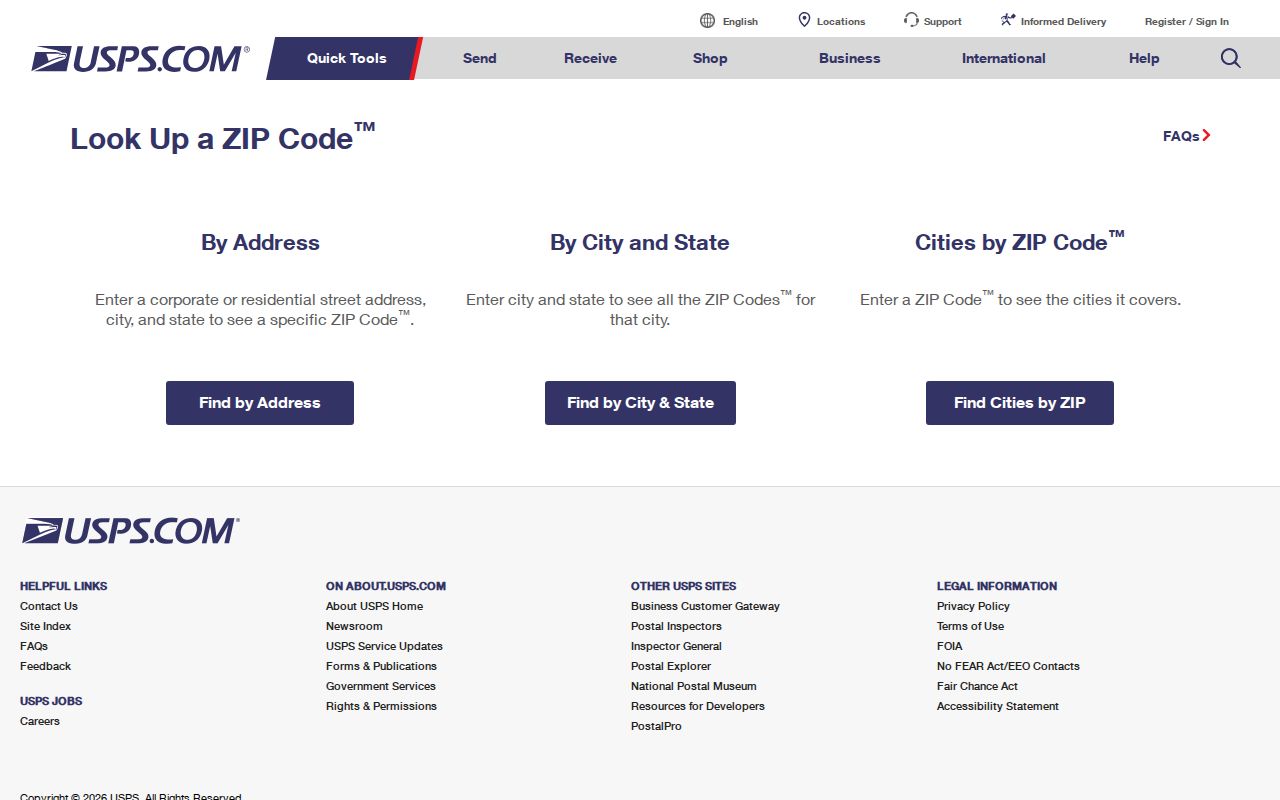
Start with the USPS ZIP Code Lookup for a complete deliverable address. Then compare that result with the city GIS and the assessor's physical-city choice. The USPS city is not a legal city-limit test. The vocabulary below prevents a common record mix-up.
- Roll
- A government list of defined items, such as assessed parcels or qualified voters, with its own access rules.
- Index
- A locator for a record. A recorder index points to an instrument; it is not the deed image or the full file.
- Parcel
- A mapped unit of land identified by an APN. It can have a situs address and a different tax mailing address.
- Criss-cross directory
- A reverse directory organized from street and house number toward an occupant or telephone listing, when a local volume exists.
A legal description and APN carry more weight than a postal label when you compare records across years. They anchor a parcel through street changes. That is also why an address lookup can never serve as a complete list of people in Los Altos.
Los Altos Court Names Need Corroboration
The Santa Clara Superior Court search offers Case Number, Party, Business, and Filing Date modes. Party Search uses First Name and Last Name. Filing Date accepts a range of no more than five days. It also takes a case type such as Civil, Criminal, Family, Probate, or Traffic. A result is a case lead. It is not a conclusion about a person's present address, conduct, or the outcome of a dispute.
Use a case number to move from the online index to the division holding the file. When a Family case number is absent, the documented request form can charge a $15 research fee. Copy and certification charges vary by division. Common figures include $0.50 per page and $15 for searches over ten minutes on a general schedule. Higher certification charges apply to certain documents. Sealed, juvenile, adoption, confidential, and protected victim material is not public content.
Public terminals and clerk counters still matter when the web result is thin. Older paper files may have moved to archive. Federal matters in the Northern District of California run through PACER separately. A Santa Clara Superior Court search cannot stand in for a federal docket.
Before trusting a name hit, compare a middle initial, party role, case type, filing date, and case number. Add an independent address or parcel fact too. Never infer a judgment, disposition, or conviction from a party entry alone. A court record is one thread of a Los Altos residents directory search. It is not the whole cloth.
Los Altos Vital Records Follow Eligibility Rules
Vital record copies for Los Altos events run through two doors. The Santa Clara County Clerk-Recorder handles many requests directly, while others go to the California Department of Public Health depending on the event and year. Walk-in service takes place at 110 W. Tasman Drive, first floor, San Jose, on weekdays from 8 to 4:30. Phone help waits at 408-299-5688. State mail requests use set forms. VS111 covers birth, VS112 death, VS113A marriage, and VS113B dissolution. A search fee can be retained even when no record turns up.
Informational copies ask for no proof of relationship. They carry a legend and cannot establish identity. Authorized identity-valid copies demand eligibility, and a mailed authorized request needs a notarized sworn statement. Confidential marriage certificates go only to spouses or by court order. Divorce decrees stay with Superior Court, though CDPH holds limited dissolution certificates for 1962 through June 1984.
California sets no single age at which births or deaths become public. Pre-July 1905 research shifts to county registers, church and cemetery records, newspapers, State Archives catalogs, and established genealogy databases. Town Crier announcements and obituaries can pin down a date or a family clue. Treat them as secondary evidence, not a certificate.
For 2026, county fees run $34 for a birth copy, $26 for death, and $19 for marriage. CDPH charges $31 for birth, $26 for death, $19 for marriage, and $18 for dissolution. Confirm live terms before mailing. Forms, processing times, and vendor routes change.
Historical Los Altos Residents Directory Shelves
Historical residents directory work in Los Altos draws on many shelves, not one annual run. Newspapers, libraries, museums, census schedules, telephone books, and maps each hold a piece. The Los Altos Town Crier started in December 1947. One repository guide lists 1948-current holdings with an unspecified gap. It also notes 1995-current access online. Older material sits at the History Museum. The library keeps the current month plus the eleven before it. Its local-history collection adds yearbooks, local books, DVDs, clippings, landmark studies, and Historical Commission newsletters.
The Los Altos city directories collection page sorts the full shelf method into ordinary alphabetic volumes and telephone books. Reverse or criss-cross formats and newspaper subject files get their own groupings. It also separates a verified volume from a plausible but unconfirmed publisher run. No authoritative exact Polk or Haines annual sequence exists. So a missing entry can never prove a move.
The Los Altos Library local-history holdings show why shelf work still matters. Ask reference staff about cataloged yearbooks and vertical-file headings. Ask also about local newspaper access and branch rules for Ancestry Library, HeritageQuest, Fold3, and My China Roots.
A directory entry places a past household in time. Even so, identity should not be treated as settled. Pair the entry with a deed, census line, obituary, permit, or vital record first. For a first view of the books and research aids near Los Altos readers, the Los Altos Library local-history page is the best stop.
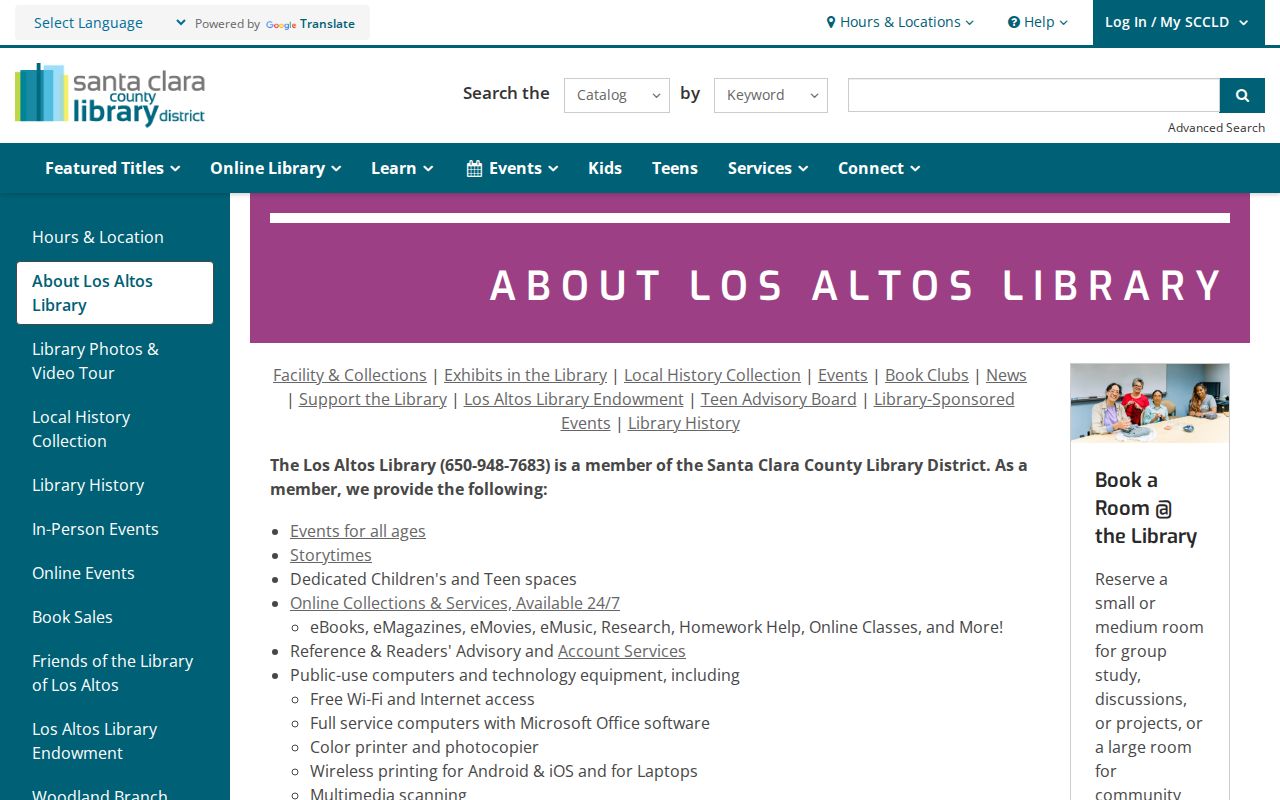
Local-history channels fill gaps that modern online records leave open. Yearbooks and newspaper references often hold the missing thread.
Los Altos Oral Histories Add Human Context
The History Museum's oral-history index centers on people, not addresses. It is not a current residence file. An indexed entry may carry a subject name, birth year, a short role description, and a recording date, while an excerpt can sit online. The full recording or transcript takes a research appointment. That gap matters when a name appears in civic history but no present address should be inferred.
The Museum research service spans its reference library, archives, special collections, and objects, though condition, security, exhibition, and loan status can limit access. The city owns the collection. A nonprofit manages it. Oral histories work best as context. They explain a household, neighborhood, civic group, or local role first spotted in another record.
The Los Altos History Museum research archive page lays out the appointment route and the wider collection. Book time before you go. Pair entries with other records. A past residents directory entry gains strength when a named role also appears in another local record.
A historical interview offers a controlled research channel. It can confirm a past tie to Los Altos without implying a current address.
Los Altos ZIP Areas Cross Civil Boundaries
ZIP 94022 covers northern Los Altos and the downtown side. Its postal territory also reaches parts of Los Altos Hills and places beyond the city. ZIP 94024 serves southern Los Altos and Loyola Corners. It carries the same overlap. Named postal facilities include the Los Altos Post Office at 221 Main Street and the Loyola Corners Post Office at 1525 Miramonte Avenue. Treat them as delivery clues, not legal boundary lines.
Start with the official USPS address and ZIP lookup on a complete address. Then open the Los Altos Public GIS Viewer to confirm incorporated jurisdiction. The assessor identifies the physical city and tax parcel. When postal labels, old maps, and present boundaries disagree, the deed's legal description settles it.
A postal map teaches one lesson fast. A ZIP code sorts mail, not jurisdictions. Placing a record under the right government custodian takes GIS layers, address data, and the office that holds the file itself. The old 94023 routing into 94022 counts as postal history rather than a current category for any Los Altos lookup. No local portal supplies a ZIP-wide resident filter. Address and APN work remains the safer path through these records.
When Los Altos Records Stop
The city's CPRA channel is the fallback. Use it when a municipal record stays hidden from staff search, GIS, or eTRAKiT. A request must name a record that exists. Good examples include a permit number, an address, a date range, an inspection file, an open code-enforcement list, plans, or address-specific correspondence. The city need not build a new list or answer a general question. It may redact exempt material. Any withholding decision must be explained.
The Los Altos California Public Records Act instructions route requests through NextRequest, and telephone or in-person requests remain documented channels too. The city must decide within ten calendar days whether records are disclosable. Unusual circumstances allow a written extension of up to fourteen days. Inspection is free. Copies may cost the direct duplication amount.
Prior request logs work as a local index. Entries from 2015 through 2024 show address-keyed permit histories, open violation list requests, plans, correspondence, and cases where the city held no responsive record. Requests after May 30, 2024 appear in NextRequest. A "no records" answer can reflect pre-incorporation timing or a file that was never created. It is not proof the building never existed. Before contacting a department, use the Los Altos CPRA page's request path and examples for wording that fits.
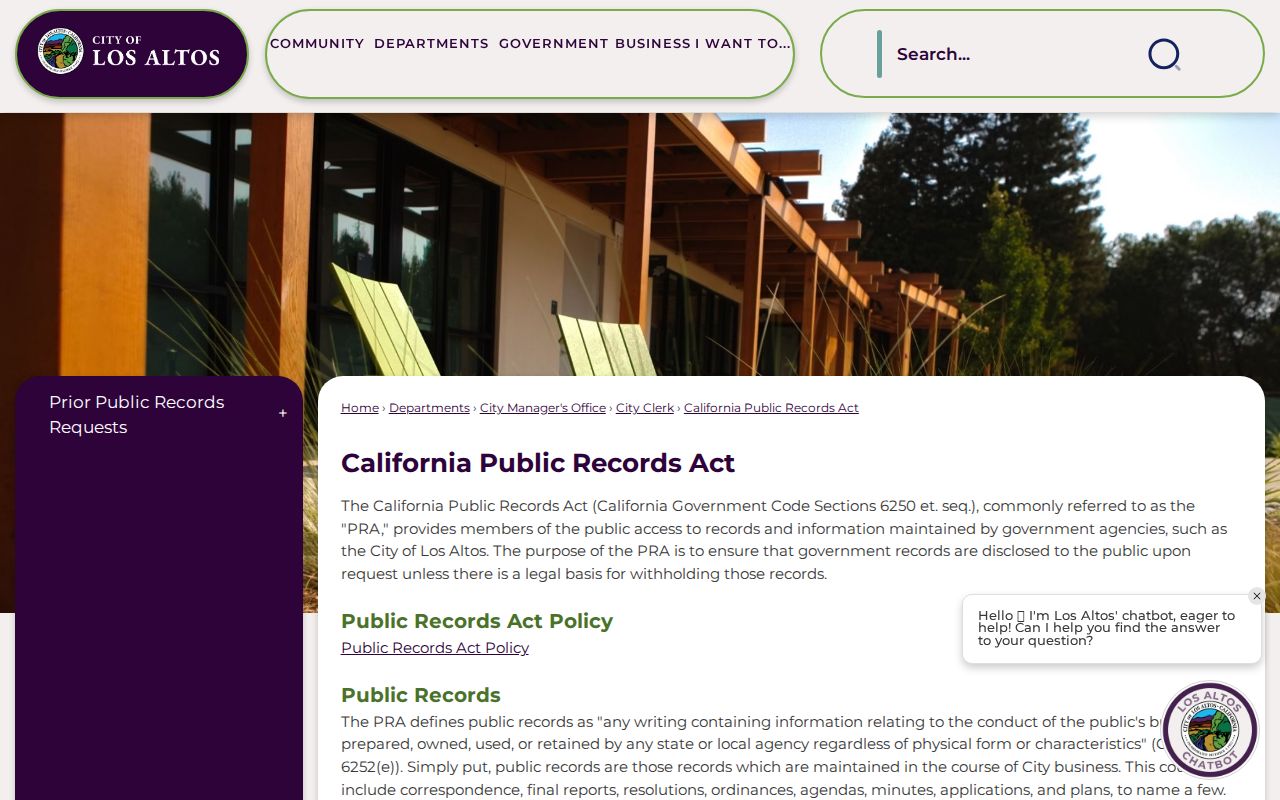
The image makes the point plainly. A focused record description beats a vague ask. Naming an existing record works far better than requesting that an office assemble a new Los Altos residents directory from scratch. Older material calls for a different chain. When a record predates city incorporation, the library, the History Museum, county reels, newspapers, and historical maps become the proper fallback resources. County authority also governs properties with a Los Altos mailing address that sit outside the incorporated city limits.
Privacy Programs Shape Los Altos Address Searches
California limits several address trails by design. Voter data falls under Elections Code sections 2188, 2188.5, and 2194, and historical voter residence and contact information stays confidential for at least 100 years under section 2194.1. The regular county form demands an exact name, birthdate, and identity field. A failed match tells a third party nothing. The qualified file goes only to approved purposes, with security and redisclosure rules attached.
Safe at Home, under Government Code sections 6205 through 6216, offers eligible participants a substitute address, mail forwarding, and confidential voter registration. Still, a parcel's legal description can expose the land even when a mailing location is protected. Recorded-document redaction rules, official home-address protections, and federal and state limits on DMV data open further gaps in any Los Altos address search.
California's DROP platform began unified data-broker deletion and do-not-sell requests on January 1, 2026, with broker processing starting August 1, 2026 for more than 500 registered brokers. A deletion request can shrink a commercial copy. It cannot erase a deed, court file, or other government record held by its custodian.
Lawful personal use. Los Altos records can support family history, civic research, property history, and reconnecting with care. Do not use an address trail to stalk, harass, intimidate, or harm a person; California law can impose serious consequences for that conduct.
Scam-Safe Los Altos Record Orders
Published fees make a handy fraud check. The County Clerk-Recorder charges $4 for the first page of a copy. Each added page costs $2. Certification runs $2 per document. A letter demanding a different amount for a deed deserves suspicion. Compare it with the published county route. A familiar parcel number proves nothing. The Controller's unclaimed-property search and claim process is free. A recovery service demanding upfront money is a warning sign.
Navigate to a government domain yourself. Compare the listed fee, then call the published office number. Never use a phone number printed only on a solicitation. For suspected deed or title fraud, Santa Clara County lists the District Attorney's Real Estate Fraud line at 408-792-2879 and realestatefraud@dao.sccgov.org. Immediate threats go to 911. Los Altos Police nonemergency is 650-947-2770. Consumer and internet fraud can go through the FTC report channel or IC3.
Keep a small paper trail. Save the request, the office response, the instrument number, and the exact date checked. That record makes it easier to correct a stale lead or explain a gap. It also helps you report a scam without exposing more personal information than necessary.