
Los Altos Neighbors by Block Source
A block lookup is a set of narrow questions. GIS answers which parcels touch the seed address. The assessor connects an address to an APN and assessed facts, but suppresses the owner online. A Los Altos neighbors lookup should preserve those source boundaries. The Recorder holds title instruments, while voter service is an identity-gated self-lookup. Neighborhood Watch and business groups add connections, not a household list.
| Source | What It Shows About a Block | Access |
|---|---|---|
| SCCMap and Los Altos GIS | Adjacent parcel geometry, jurisdiction, districts, and map layers | Free browse and parcel clicks; owner names are not shown |
| Santa Clara County Assessor | One parcel at a time: APN, values, exemptions, districts, and latest instrument | Free address or APN web search; owner file at the office |
| Santa Clara County Recorder | Grantor, grantee, legal description, and ownership chain for a parcel | Office workstations, reels, books, or microfilm |
| Santa Clara County voter service | A named voter's own status and address, not an anonymous block cohort | Exact identity self-lookup; full file needs an approved purpose |
| Neighborhood Watch and Block Action Teams | Block connection, preparedness, and a route to a captain or group | Program registration or contact; no public household roster |
| Community and business directories | Public organizational or business affiliation | Public member directories; not a resident roll |
| Historical reverse directories | Past address-to-occupant clues if a local volume is found | Library or Museum research; exact Los Altos runs unverified |
Owners are not the same as occupants, and an organizational contact is not proof that the person lives on the block. A sound result states which record supplied each fact and where the record stops.
Map Los Altos Neighbors by Parcel
The adjacent-parcel method starts with a seed address and moves outward one lot at a time. The Los Altos Public GIS Viewer accepts an address, undashed APN, place, or point of interest. The county SCCMap viewer adds broader geography. No verified control selects every neighbor, so record each APN rather than call a buffer a roster.
- Search the seed address in city GIS and county SCCMap. Confirm the physical jurisdiction before treating a parcel as part of incorporated Los Altos.
- Keep the parcel layer visible, pan and zoom along the block, and click each adjoining parcel. Save the APN and the visible map context for each lot.
- Run each APN or physical address through the Santa Clara County Real Property Search. Use the physical city, not only the mailing city.
- Compare assessed facts and the latest title-changing instrument. The web result does not publish the owner, so use county public access when an assessee file is needed.
- Take each instrument number to the Recorder and inspect parcels one by one. For a whole named street and its full chain, move to the Los Altos street directory workflow.
A parcel is a mapped unit of land. “Adjacent” describes geometry, not a personal relationship. A corner lot, easement, public strip, or parcel across a lane can change what the map appears to show. A Los Altos neighbors result should preserve that parcel distinction.
Los Altos Neighbor Records: GIS, Assessor, Recorder
Three systems meet at the block but do different work. GIS shows parcel shape, jurisdiction, zoning, land-use layers, historical designation, and districts. Adopted maps control if a viewer conflicts with official documents. GIS is right for geometry, not for claiming an owner or household. Los Altos neighbors research should keep that evidence boundary visible.
The assessor starts with address or APN and can show the latest instrument, transfer date, values, exemptions, districts, and net value. It has no public owner-name field; public terminal or microfiche access supplies assessee data. The Recorder supplies grantor, grantee, document, and legal description, but is not address-keyed and does not conduct title searches. Four map clicks yield four parcel leads, not four households. Permits and code cases remain project evidence.
Los Altos Voter Lookup Stops at Identity
The county voter service is useful when a person checks their own registration. It is not a public way to browse a block or ask for everyone registered at a street address. The exact-match form requires a first name, last name, birthdate, and either a driver's license or ID detail or a “none” choice, plus either the last four Social Security digits or a “none” choice. It cannot be used to browse Los Altos neighbors by street.
- First and last name
- Required fields that match the named registrant.
- Birthdate
- Required in MM/DD/YYYY format to separate similar names.
- Driver license or ID
- Conditional identity detail, or the user selects “none.”
- Last four Social Security digits
- Conditional alternate check, or the user selects “none.”
- Go
- The self-service action that returns the person's own status and election details.
A match may show status, registered address, party preference, language, vote-by-mail or provisional status, polling place, and guide delivery. A nonmatch does not disclose a third-party record. California Elections Code sections 2188, 2188.5, and 2194 restrict full-file access to approved election, scholarly, journalistic, political, or governmental purposes. The state voter-file request rules describe that application route. Historical voter residence and contact information remains confidential for at least 100 years, and Safe at Home voters are confidential.
Los Altos Neighbors and Neighborhood Watch
The City's Los Altos Neighborhood Watch program helps form groups and connects residents with a Block Captain through Police. It is a civic safety and contact layer, not a published neighbor directory. Block Action Teams add a “Connect, Care and Prepare” approach in city material, but no public captain or household roster was verified.
The program's own public role is best understood as an invitation to build a local connection. It does not authorize a request for private names, addresses, phone numbers, or a list of who belongs to a block. Use the official contact route and let participants decide whether to share their details.
The official Neighborhood Watch page shows the public program route for block groups and captains.
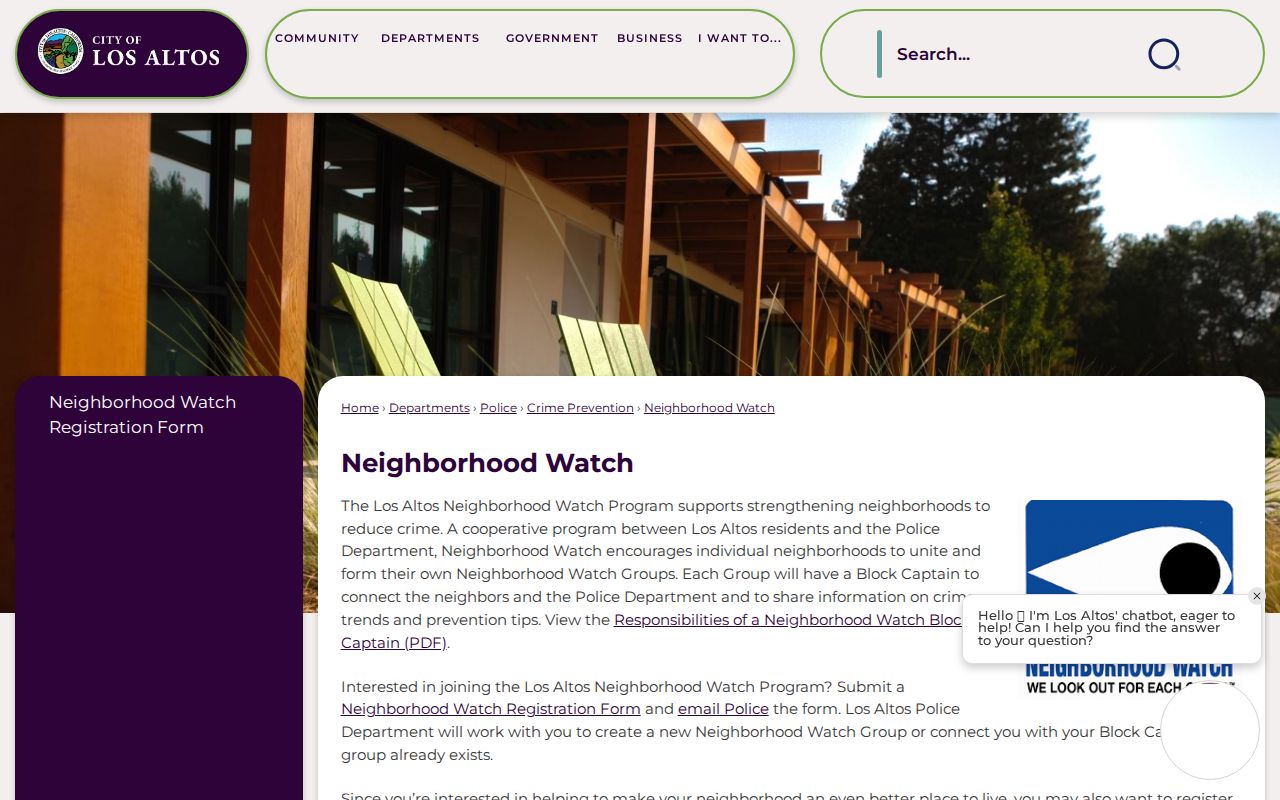
The Neighborhood Watch resource connects willing participants; it does not expose a household roster, which is the right boundary for a public block lookup.
Los Altos Community Groups and Public Affiliations
Los Altos records identify several community layers, but the research found no public neighborhood-association directory that lists every household. Public affiliation directories can help explain a business or civic link near an address. They cannot establish that a member lives there. The verified inventory keeps those uses distinct.
| Organization or Layer | Verified Public Function | Directory Status |
|---|---|---|
| Los Altos Neighborhood Watch | Police-supported groups and Block Captains | No public household or captain roster located |
| Block Action Teams | Connect, Care and Prepare block organization | No resident roster located |
| Los Altos Chamber | Business and community organization | Public business-member directory, not residents |
| Los Altos Village Association | Downtown business association | Public member or business directory |
| Rotary, Kiwanis, Garden Club, Newcomers Club, AAUW, League of Women Voters, American Legion Post 558, and Masonic Lodge 712 | Activities documented in city records | No verified public membership roll |
The History Museum oral-history index and library vertical files can confirm a person's historic civic role, subject name, birth year, or local description. Those collections are person-centered history, not a current block directory. The same care applies to business affiliation: a public address can be a premises, mailing address, registered agent, or service office.
Los Altos Public Affiliation Records
California business and financing records can help separate a public affiliation from a residential claim. The California UCC Connect search works with debtor, file number, or secured-party fields. A UCC result is a financing record, not proof that a debtor lives on the block.
The UCC search illustrates why an official record still needs a category label. It may connect a name to a filing, but it does not turn a filing address into a household roster.
The California business entity search can show an entity name, status, type, formation date, agent, address, and plain filing PDFs. Those fields can support a business-affiliation check when an organization appears in a block's public directory.
A registered agent or business address may be a service office. Treat it as an affiliation clue, not a current residence, and do not merge it into a private household list.
Los Altos ZIP Records Cross City Lines
Shared postal geography can make a block look local when its custodian is elsewhere. ZIP 94022 serves northern Los Altos and downtown, plus parts of Los Altos Hills and outside areas. Its named post office is Los Altos Post Office, 221 Main Street. ZIP 94024 serves southern Los Altos and Loyola Corners, plus parts of Los Altos Hills and Loyola. Its named post office is Loyola Corners Post Office, 1525 Miramonte Avenue.
Run the complete address through the USPS ZIP lookup, then check physical city in the assessor and GIS. USPS confirms delivery, GIS jurisdiction, the assessor situs and tax districts, and the deed parcel identity. No local portal documents a public ZIP-wide resident filter.
A block lookup that begins with “Los Altos” as a mailing city can therefore pull the wrong permit or records custodian. Verify the civil boundary before contacting a city program, county office, or recorder.
Los Altos Neighbor Records Compared
Different record categories carry different levels of proof. A useful comparison keeps the source type visible instead of blending every name and address into one result.
| Source category | What it can show | Why caution is needed |
|---|---|---|
| Official parcel and title records | GIS geometry, assessor APN facts, recorded parties, and legal descriptions | Strong for land and title questions, not a complete occupant list |
| Official voter and community sources | Named self-lookup status, approved file use, or voluntary civic connections | No public household roster; access and purpose rules apply |
| Generic commercial neighbor tools | Compiled address and affiliation leads from mixed data | Stale joins, same-name errors, missing household members, and unclear source dates |
Privacy Limits for Los Altos Neighbors
Renters, minors, household members, utility customers, delivery records, DMV data, and protected residents do not become public because a parcel is visible. California Safe at Home provides a substitute address, mail forwarding, service-of-process protection, and confidential voter registration for eligible participants under Government Code sections 6205-6216. A deed's legal description may still reveal the parcel. A Los Altos neighbors lookup must stop when a source protects the person or household.
Incident records have their own route. The Los Altos police report request form asks for requester and incident details, not a neighbor list. Protected victim, juvenile, personnel, and active-investigation material may be withheld.
California's Safe at Home guidance explains the substitute-address and confidential-voter protections available to eligible participants.
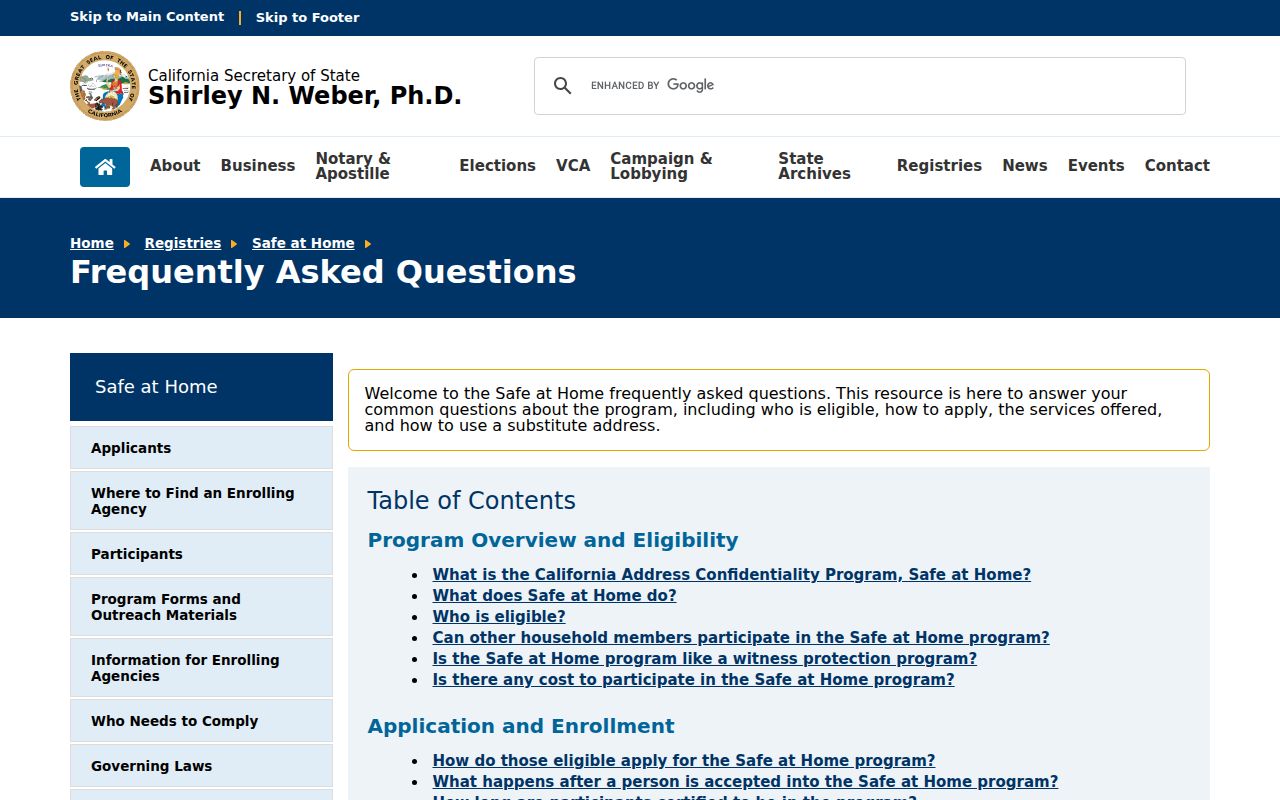
Safe at Home is a clear reminder that a public address map and a person's safe contact address are not the same thing. Do not try to reverse a substitute address through parcel clues.
The Los Altos Police report-copy instructions are the source for the incident-request image and its access limits.
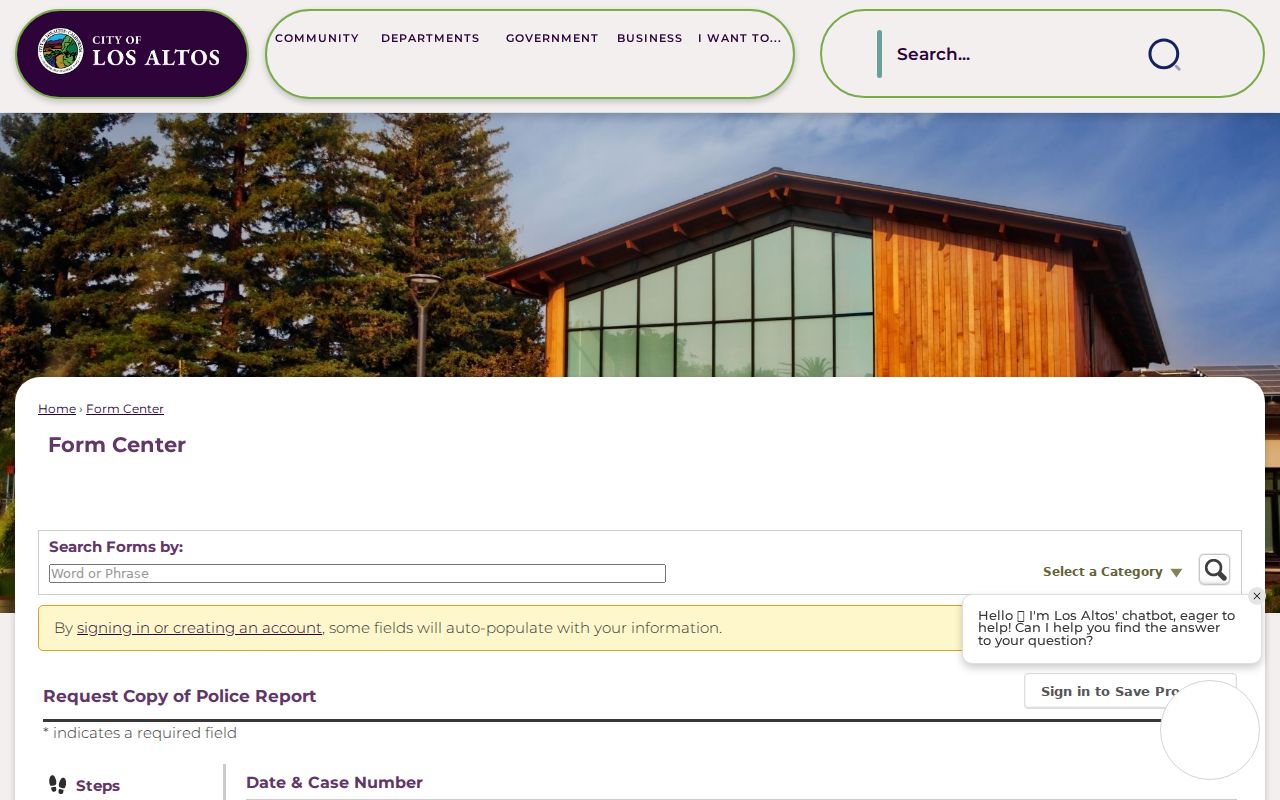
The police request route is limited to releasable incident records, with the agency's privacy and access rules applied to each request.
Lawful use. Use Los Altos neighbor research for civic connection, personal safety awareness, genealogy, or a focused public-record question. California Penal Code section 646.9 addresses stalking and section 653.2 addresses harmful electronic publication; never use a parcel, voter, or affiliation clue to watch, harass, intimidate, or expose a person.