
Start a Los Altos Residents Directory Search
Los Altos records divide a person, a parcel, and a past household among different custodians. A Los Altos residents directory search works best when the known fact is named first and each result stays tied to its record role. The Santa Clara County Assessor can connect a physical address to an APN and recent property facts, but its public web result suppresses the assessee name. The Registrar of Voters offers an identity-gated status check, not a street roster. The Clerk-Recorder holds the deed trail, while the Superior Court, library, museum, and city departments answer other questions.
A practical search also respects time. Los Altos incorporated on December 1, 1952, so a pre-incorporation building may have county evidence without a city permit. A current city affiliation is not proof of a private residence, and a deed proves a title role rather than everyone who occupies a parcel. Use the following order to keep a name, address, and historical clue from being blended into one unsupported conclusion.
- Start with the physical address or APN in the Santa Clara County Real Property Search. Save the physical city, latest title-changing instrument, transfer date, values, exemptions, and districts.
- Use the Santa Clara County voter status form only for an exact self-lookup with the required name, birthdate, and identity fields. It is not a way to browse people on a street.
- Take the assessor instrument number or APN to the Clerk-Recorder office. Search the grantor and grantee roles, then read the deed and legal description before following an earlier owner.
- For a former household, ask the Los Altos Library and History Museum about yearbooks, vertical files, Town Crier material, oral histories, and any verified reverse directory volume.
- When a municipal file is identifiable but not online, submit a focused California Public Records Act request or ask the responsible city counter which existing record can be inspected.
This sequence produces leads, not a universal resident list. Middle initials, APNs, case numbers, dates, and legal descriptions are the details that keep two people with the same name apart. The complete address-keyed pass belongs in the Los Altos street directory, where parcel, deed, permit, and historical-address evidence stay together.
Los Altos Offices Behind Resident Records
Santa Clara County is the durable starting point for property, deed, tax, and Superior Court records. Los Altos supplies municipal permits, code files, GIS layers, staff affiliations, business licensing, police requests, and council history. California state systems add vital-record copies, professional licenses, business filings, and purpose-limited voter-file access. The right office depends on whether the question concerns title, a public project, an official affiliation, a life event, or a historical household.
Santa Clara County Clerk-Recorder
Official records from 1850 forward.
1981-present workstations; 1850-1980 reels, books, or microfilm.
Santa Clara County Assessor
Address and APN property search.
Property Transfer Unit: 408-299-5540
Santa Clara County Registrar of Voters
1555 Berger Drive, Building 2, San Jose.
408-299-VOTE
City Hall is the local counter for the City Clerk, Building Division, Planning, Code Enforcement, and police-record requests. Development Services lists public-counter hours of Monday through Friday, 8 to 5. Building, code, and planning questions can also be directed by phone or email. A Los Altos mailing address outside incorporated limits belongs with the relevant county or Los Altos Hills authority, so jurisdiction should be confirmed in GIS before a request is sent.
How the Los Altos Assessor Search Works
The Santa Clara County Real Property Search is an address-to-parcel tool, not an owner-name directory. Simple Address Search, Advanced Address Search, and Search by APN are separate modes. Physical city matters because 94022 and 94024 also reach Los Altos Hills and unincorporated territory. The web result can show the latest document number, type, and transfer date, assessed values, exemptions, districts, and tax-default information, while the owner or assessee remains suppressed online.
The county's search tips explain why a postal city can mislead. Use the street name and physical city, omit punctuation, enter numbered streets as numerals, and leave the unit blank when a list of condominium or apartment units is needed. An APN can be entered with or without dashes in the documented formats. A public terminal or microfiche at the office is the channel for assessee information and older ownership detail.
The county property search provides the current address-to-APN view used before an office visit.
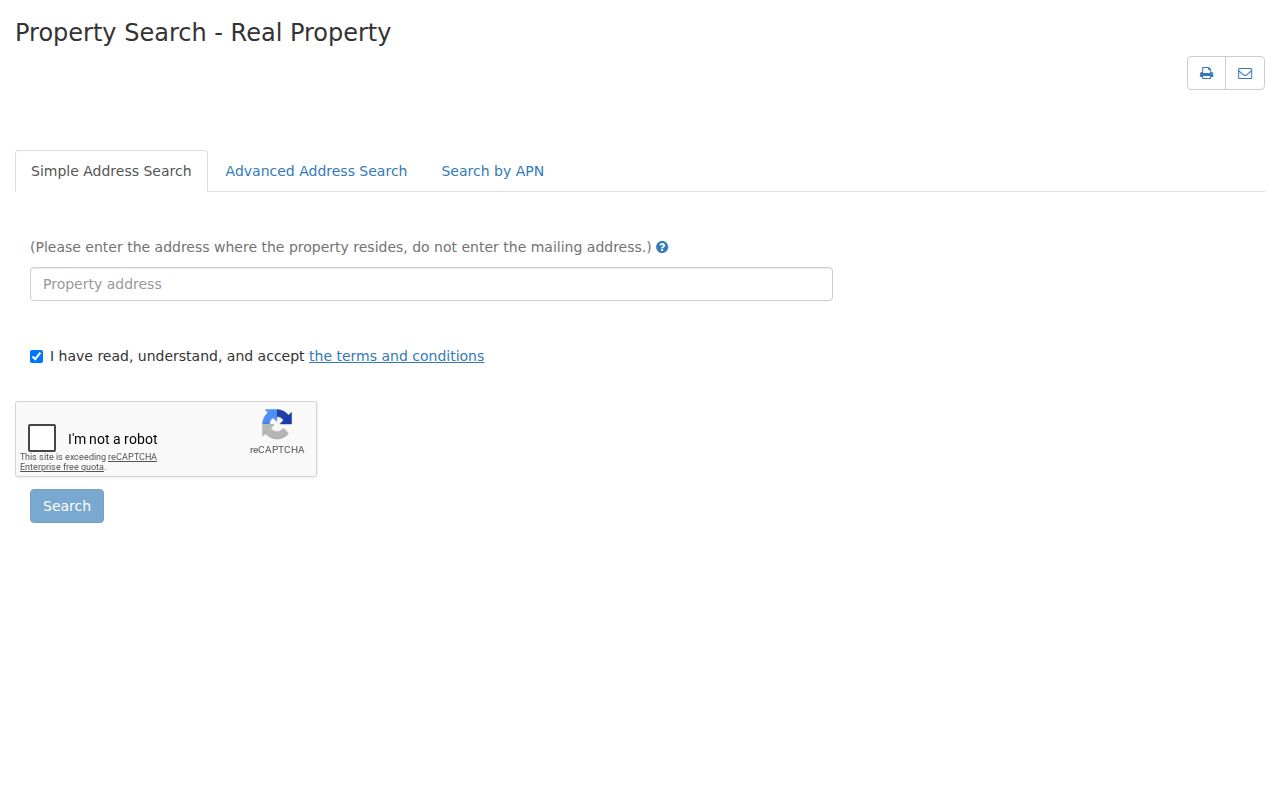
The assessor image makes the public search boundary visible: parcel facts are online, while the assessee name requires the documented office channel.
The visible fields make the address trail reproducible:
| Field | Mode | Required | Format or use |
|---|---|---|---|
| Property address | Simple | Yes | Accept terms before searching. |
| Street Number | Advanced | Conditional | Use with street name and physical city. |
| Street Direction | Advanced | No | Dropdown selection. |
| Street Name | Advanced | Yes | At least one character with physical city. |
| Street Type | Advanced | No | Dropdown selection. |
| Unit | Advanced | No | Omit to browse returned units. |
| City | Advanced | Yes | Select the physical, not postal, city. |
| APN Number | APN mode | Yes | Eight digits or 123-45-678. |
| Terms acceptance | All modes | Yes | Search stays disabled until accepted. |
Store the assessor result separately from anything learned at the office. A mailing address can differ from the situs, the public web result limits current-owner history to the most recent three years, and an exemption is evidence about a tax filing rather than proof of who lives there.
The county's sample result also shows document and transfer fields, tax-rate area, school and special districts, assessed land and improvement values, exemptions, and net assessed value. It does not show the owner or assessee, mailing address, sketch, market sale price, or linked deed image in the basic web result.
The official assessor instructions are the best companion to the search field sequence because they keep physical-city and unit handling clear.
Note: An APN is the bridge from an address search to county property records, but it is not itself a person or household identifier.
Current Los Altos Residents Directory Sources
No single public database lists every private resident in Los Altos. The current Los Altos residents directory is a set of partial rolls. Each row below answers a different question, and some are intentionally narrow. The assessor is parcel-centered, the voter form is person-centered but identity-gated, the recorder is instrument-centered, and city directories often describe official or business affiliations rather than household membership.
| Source | What it can establish | Keeper | Access boundary |
|---|---|---|---|
| Real Property Search | APN, latest instrument, values, exemptions, districts | Santa Clara County Assessor | Free address/APN web search; owner suppressed |
| Voter status lookup | An exact registrant's status and address response | Registrar of Voters | Required identity fields; no street browse |
| Official Records index | Grantor, grantee, document, date, and type | Clerk-Recorder | Office research; copies by instrument or book/page |
| City staff directory | Current municipal department affiliation | City of Los Altos | Free search; JavaScript-rendered results |
| Business directory | Business name, supplied address, phone, and link | City of Los Altos | Public business affiliation, not residence proof |
| Neighborhood Watch and block groups | Ways to form or join a local connection | Los Altos Police and civic groups | No public household roster verified |
The Los Altos staff and department directory is useful when a public office affiliation is the clue. Its fields are Category, First Name, and Last Name, followed by Search. The separate business directory can show a supplied business address and phone. Neither should be turned into a private-resident list.
The Los Altos city directory search shows how a current municipal affiliation is reached through category and name fields.
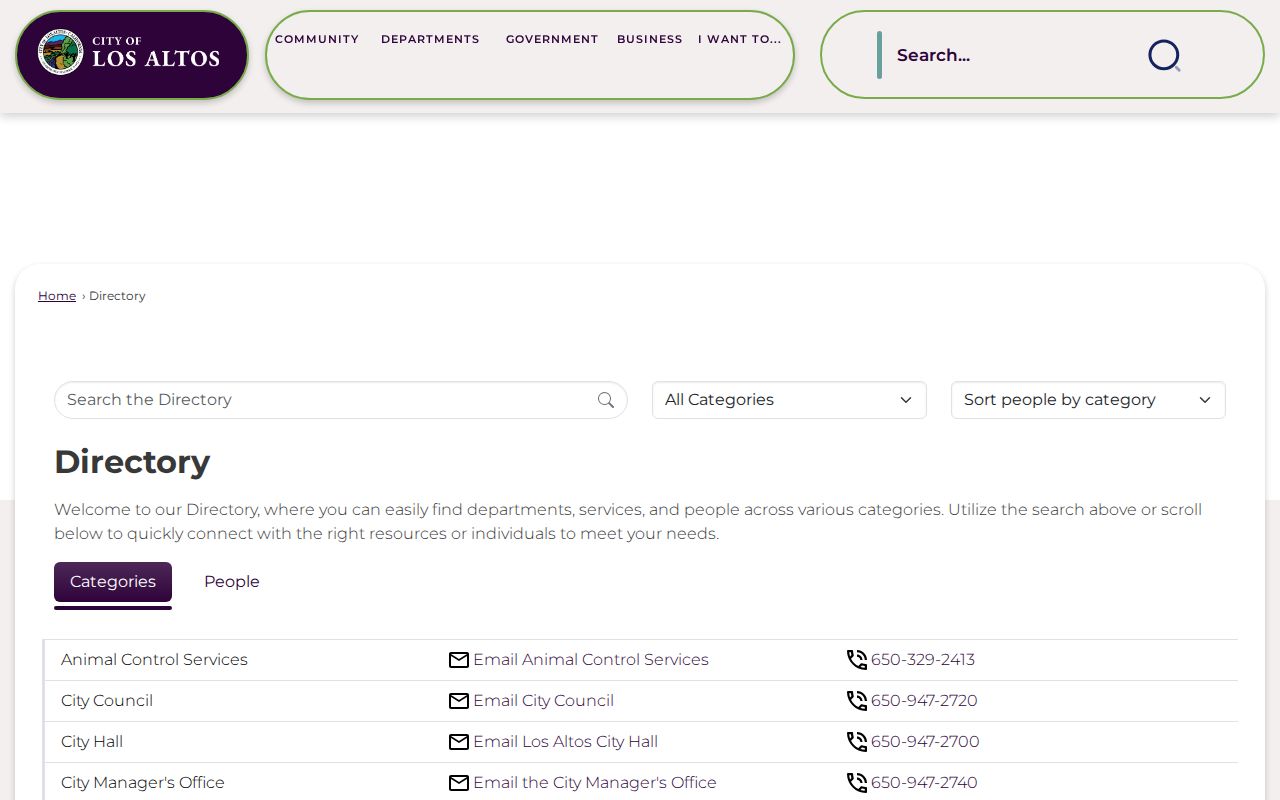
The staff-directory image represents a public work affiliation, not a private residence record.
A name-first question may need the court party index, a professional-license search, a business filing, a vital-record application, or the Controller's unclaimed-property search. Those records reveal a role, event, filing, or historical clue. They do not all confirm a current residence.
The Los Altos Directory Myth
The most common mistake is treating a commercial search product as a master roll or assuming that an official source must expose every person tied to an address. Los Altos has neither. County ownership information is suppressed from the assessor's public web result. The regular voter form is a private self-service check that requires exact identity data. Deeds, permits, business files, and newspapers each preserve a different relationship to a place.
Commercial people-finder products may join purchased data with public records, but a joined address can be stale, mismatched, or attached to the wrong person. Official records are narrower and less convenient, yet their custodian, date, field names, and access rule can be checked. A sound search uses commercial material only as an unverified lead, if used at all, and returns to the government, court, library, or museum source for confirmation.
| Question | Official record layer | Commercial search category |
|---|---|---|
| Who is tied to a parcel? | Assessor APN facts, office assessee file, recorder instrument | May merge old addresses or ownership clues |
| Was a person a party to a case? | Santa Clara Superior Court party and case index | May omit sealed records or confuse same names |
| What happened to a past household? | Town Crier, library files, census, deed, probate, or vital evidence | Often supplies a thin address trail without context |
The official-versus-commercial distinction is also a privacy boundary. A source that can be corrected by its custodian should not be replaced with a profile that cannot show where a fact came from.
Los Altos Address Terms Keep Records Straight
Address fields look alike but answer different questions. USPS confirms delivery. The assessor uses a physical city to place a parcel in the correct tax jurisdiction. A tax mailing address can point somewhere else. A deed's legal description identifies the land even when a street name or number changes. Keeping those roles separate is essential around Los Altos, Los Altos Hills, Loyola, and unincorporated edges.
Use the USPS ZIP Code Lookup for a complete deliverable address, then compare the result with the city GIS and assessor physical-city choice. The USPS city is not a legal city-limit test.
The vocabulary below prevents a common record mix-up:
- Roll
- A government list of defined items, such as assessed parcels or qualified voters, with its own access rules.
- Index
- A locator for a record. A recorder index points to an instrument; it is not the deed image or the full file.
- Parcel
- A mapped unit of land identified by an APN. It can have a situs address and a different tax mailing address.
- Criss-cross directory
- A reverse directory organized from street and house number toward an occupant or telephone listing, when a local volume exists.
A legal description and APN carry more weight than a postal label when comparing records across years. They also show why an address lookup cannot be treated as a complete list of people.
Los Altos Court Names Need Corroboration
The Santa Clara Superior Court search offers Case Number, Party, Business, and Filing Date modes. Party Search uses First Name and Last Name, while Filing Date accepts a date range of no more than five days and a case type such as Civil, Criminal, Family, Probate, or Traffic. A result is a case lead, not a conclusion about a person's present address, conduct, or the outcome of a dispute.
Use a case number to move from the online index to the division that holds the file. If a Family case number is absent, the documented request form can charge a $15 research fee; copy and certification charges vary by division. Common figures in the research are $0.50 per page, $15 for searches over ten minutes on a general schedule, and higher certification charges for certain documents. Sealed, juvenile, adoption, confidential, and protected victim material is not general public content.
In-person public terminals and clerk counters remain important when the web result is thin or an older paper file has moved to archive. Federal matters in the Northern District of California use PACER separately. A Santa Clara Superior Court search cannot stand in for a federal docket.
Compare a name hit with a middle initial, party role, case type, filing date, case number, and an independent address or parcel fact. Do not infer a judgment, disposition, or conviction from a party entry alone.
Los Altos Vital Records Follow Eligibility Rules
Birth, death, and marriage copies come through the Santa Clara County Clerk-Recorder or the California Department of Public Health, depending on the event and year. County service is at 110 W. Tasman Drive, first floor, San Jose, on weekdays from 8 to 4:30, with phone assistance at 408-299-5688. State mail applications use VS111 for birth, VS112 for death, VS113A for marriage, and VS113B for dissolution. A search fee can be retained when no record is found.
Informational copies are generally available without proving an authorized relationship, but they carry a legend and cannot establish identity. Authorized identity-valid copies require eligibility, and a mailed authorized request requires a notarized sworn statement. Confidential marriage certificates are limited to spouses or a court order. Divorce decrees remain with Superior Court even though CDPH holds limited dissolution certificates for 1962 through June 1984.
California has no simple rule that makes every birth public after one number of years or every death public after another. Pre-July 1905 research moves toward county registers, church and cemetery records, newspapers, State Archives catalogs, and established genealogy databases. Town Crier announcements and obituaries can establish a date or relationship clue, but they are secondary evidence rather than a certificate.
For 2026, the research records state fees of $34 for a local birth copy, $26 for a local death copy, and $19 for a local marriage copy. CDPH figures are $31 for birth, $26 for death, $19 for marriage, and $18 for dissolution. Confirm live terms before mailing because forms, processing times, and vendor routes can change.
Historical Los Altos Residents Directory Shelves
The historical Los Altos residents directory layer is a combination of newspaper, library, museum, census, telephone, and map sources rather than one verified annual city-directory run. The Los Altos Town Crier began in December 1947. A repository guide describes 1948-current holdings with an unspecified gap, 1995-current online access, and older material at the History Museum. The library keeps the current month and eleven prior months. The library's local-history collection also includes yearbooks, local books, DVDs, clippings, landmark studies, and Historical Commission newsletters.
For the full shelf method, the Los Altos city directories collection page separates ordinary alphabetic volumes, telephone books, reverse or criss-cross formats, and newspaper subject files. It also keeps the distinction between a verified volume and a plausible but unconfirmed publisher run. No authoritative exact Polk or Haines annual sequence was located, so a missing entry cannot be used to prove a move.
The Los Altos Library local-history holdings show why shelf work matters. Ask reference staff about cataloged yearbooks, vertical-file headings, local newspaper access, and branch rules for Ancestry Library, HeritageQuest, Fold3, and My China Roots.
The library collection gives a past household a place in time, but an entry should be paired with a deed, census, obituary, permit, or vital record before identity is treated as settled.
The Los Altos Library local-history page provides the best first view of the books and research aids available near Los Altos readers.
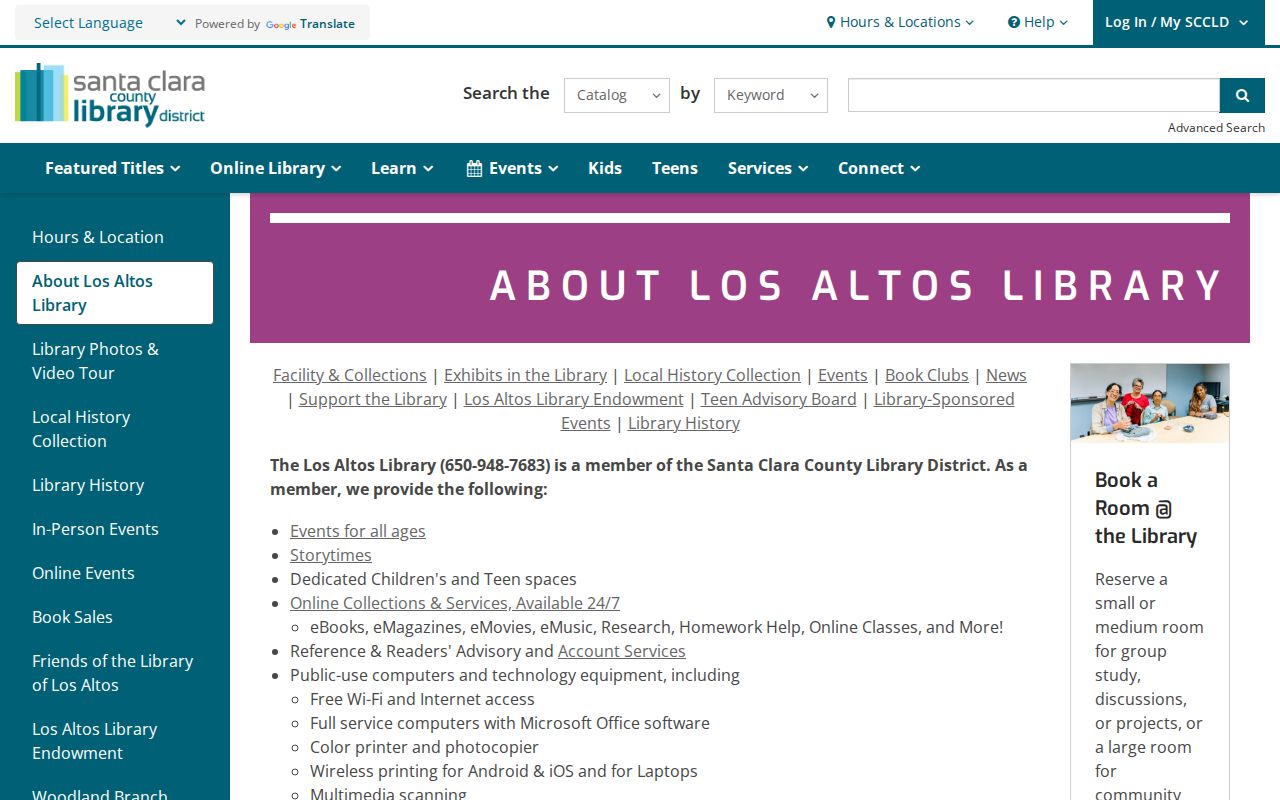
The library image points to a local-history channel that can fill gaps left by modern online records, especially for yearbooks and newspaper references.
Los Altos Oral Histories Add Human Context
The History Museum's oral-history index is a person-centered historical source, but it does not function as a current residence file. An indexed entry can include a subject name, birth year, short description of local role, and recording date. An excerpt may be online, while the full recording or transcript requires a research appointment. That difference matters when a name appears in a civic history but no present address is appropriate to infer.
The Museum research service covers its reference library, archives, special collections, and objects. Condition, security, exhibition, and loan status can limit access. The collection is city-owned and nonprofit-managed. Its oral histories and broader archive are strongest when used to explain a household, neighborhood, civic group, or local role found first in another record.
The Los Altos History Museum research archive describes the appointment route and the larger collection context. A Los Altos residents directory entry from the past is stronger when its role is paired with another local record.
The Museum image represents a controlled research channel. A historical interview can confirm a person's connection to Los Altos without claiming that the person lives there now.
Los Altos ZIP Areas Cross Civil Boundaries
ZIP 94022 covers northern Los Altos and the downtown or north-side area, but its postal territory also reaches parts of Los Altos Hills and places outside the city. ZIP 94024 serves southern Los Altos and Loyola Corners, with the same kind of overlap. The named postal facilities are the Los Altos Post Office at 221 Main Street and the Loyola Corners Post Office at 1525 Miramonte Avenue. These are delivery clues, not legal boundary lines.
Use the official USPS address and ZIP lookup on a complete address. Then use the Los Altos Public GIS Viewer to check incorporated jurisdiction, and the assessor to select the physical city and tax parcel. The deed's legal description is the identity anchor when postal labels, old maps, and present boundaries disagree.
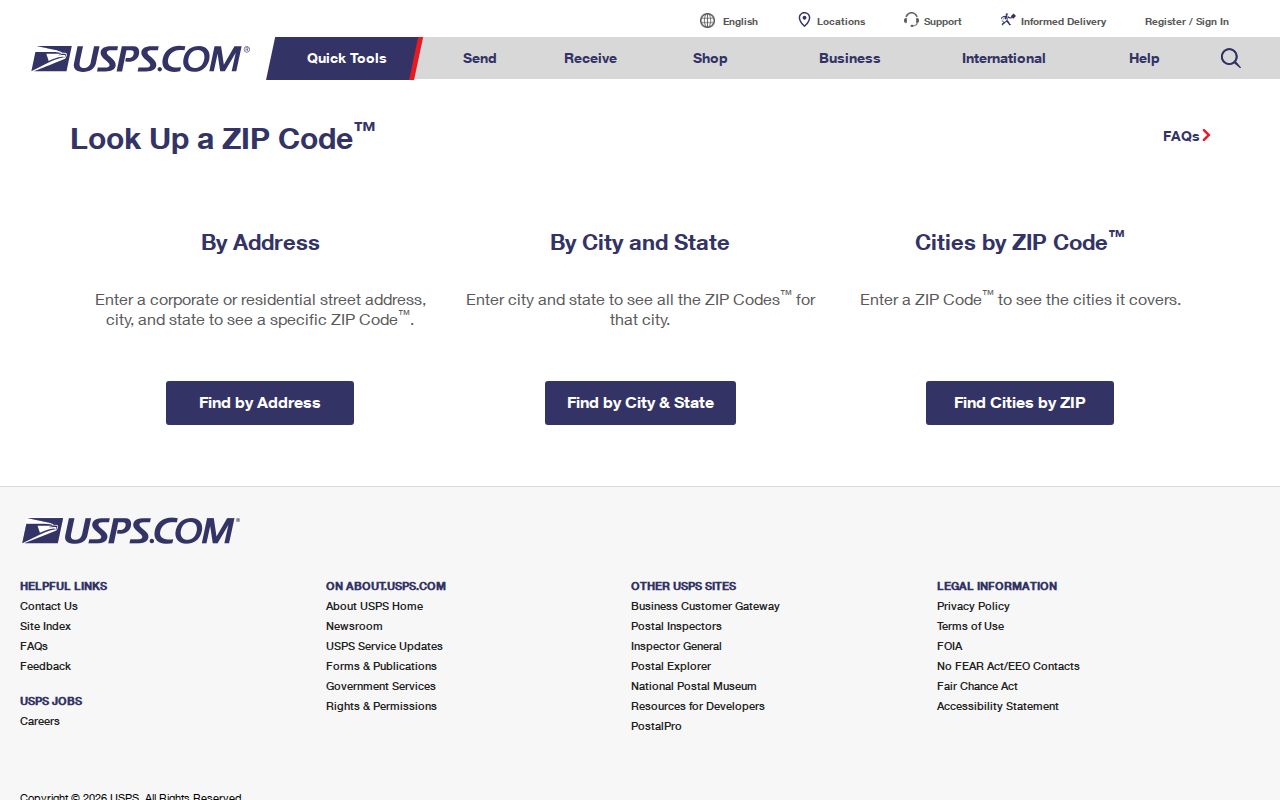
The USPS image reinforces a simple rule: a ZIP can narrow delivery, but only GIS and the relevant government custodian can place a record in the right jurisdiction.
The former 94023 routing to 94022 is useful postal history, not a current category. No documented local portal supplies a ZIP-wide resident filter, so address and APN work remains the safer path.
When Los Altos Records Stop
The city CPRA channel is the fallback when an identifiable municipal record is not exposed through staff search, GIS, or eTRAKiT. The request should name an existing record, such as a permit number, address, date range, inspection record, open code-enforcement list, plan, or address-specific correspondence. The city does not have to create a new list or answer a general question. It may redact exempt material and must explain a withholding decision.
The Los Altos California Public Records Act instructions route requests through NextRequest, while telephone and in-person requests remain documented channels. The city must determine within ten calendar days whether records are disclosable and can make a written extension of up to fourteen days for unusual circumstances. Inspection is free; copies may cost the direct duplication amount.
The prior request logs are a useful local index. Logs from 2015 through 2024 show address-keyed permit histories, open violation list requests, plans, correspondence, and occasions when the city had no responsive record. Requests after May 30, 2024 appear in NextRequest. A “no records” response can reflect pre-incorporation timing or the fact that a file was never created, not proof that a building or event did not exist.
For the Los Altos CPRA page's request path and examples, use the public-record instructions before contacting a department.
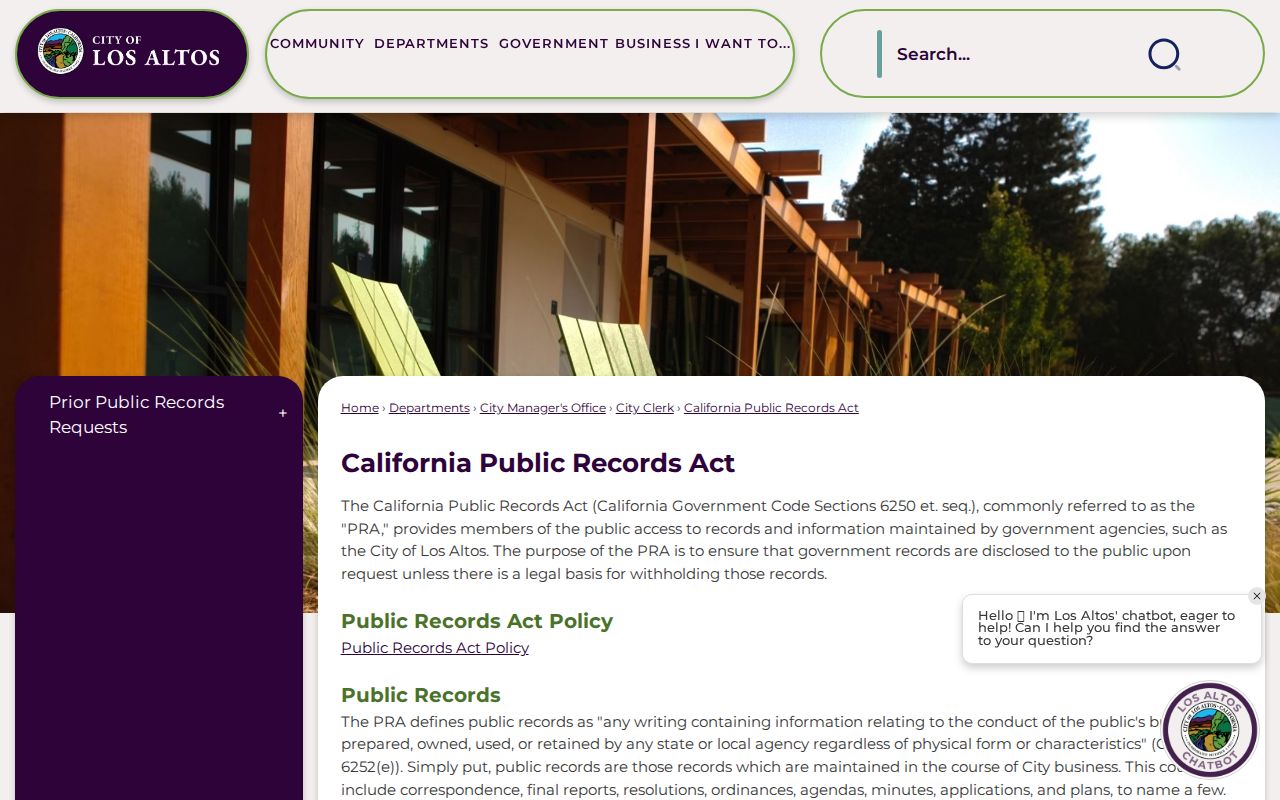
The request image shows why a focused record description works better than asking an office to assemble a new Los Altos residents directory.
When the record predates city incorporation, the library, History Museum, county reels, newspapers, and historical maps are the proper fallback chain. County authority also applies when a Los Altos mailing address falls outside the incorporated city.
Privacy Programs Shape Los Altos Address Searches
California limits several address trails by design. Voter data is governed by Elections Code sections 2188, 2188.5, and 2194, and historical voter residence and contact information remains confidential for at least 100 years under section 2194.1. The regular county form asks for an exact name, birthdate, and identity field. It does not disclose a third party when the match fails, and the qualified file is available only for approved purposes with security and redisclosure rules.
Safe at Home, under Government Code sections 6205 through 6216, can provide a substitute address, mail forwarding, and confidential voter registration for eligible participants. The legal description of a parcel may still reveal the land even when a participant's mailing location is protected. Recorded-document redaction rules, official home-address protections, and the federal and state limits on DMV data create further gaps.
California's DROP platform began unified data-broker deletion and do-not-sell requests on January 1, 2026, with broker processing beginning August 1, 2026 for more than 500 registered brokers. A deletion request can affect a commercial copy, but it does not erase a deed, court file, or other government record held by its custodian.
Lawful personal use. Los Altos records can support family history, civic research, property history, and reconnecting with care. Do not use an address trail to stalk, harass, intimidate, or harm a person; California law can impose serious consequences for that conduct.
Scam-Safe Los Altos Record Orders
Official fees are a useful fraud check. The County Clerk-Recorder states $4 for the first page of a copy, $2 for each added page, and $2 for certification per document. A letter demanding a different amount for a deed should be compared with the published county route, not paid because it uses a familiar parcel number. The Controller's unclaimed-property search and claim process is free, so a recovery service demanding an upfront fee is a warning sign.
Independently navigate to a government domain, compare the listed fee, and call the published office number. Do not use a phone number printed only on a solicitation. For a suspected deed or title fraud, Santa Clara County lists the District Attorney's Real Estate Fraud line at 408-792-2879 and realestatefraud@dao.sccgov.org. Immediate threats go to 911 or Los Altos Police nonemergency at 650-947-2770. Consumer and internet fraud can be reported through the FTC report channel or IC3.
Keep a copy of the request, the office response, the instrument number, and the exact date checked. That small record makes it easier to correct a stale lead, explain a gap, or report a scam without exposing more personal information than necessary.